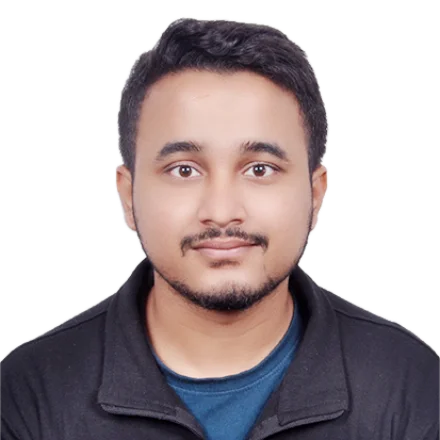
Currently an AI Engineer at Armada AI, I build grounded LLM systems and inference-planning tools. Previously at Avataar AI, I worked on product-image generation and novel-view synthesis. M.Tech in AI, IISc Bangalore. My research explores visual storytelling and learning from limited data.
AttriStory pairs a benchmark of 200 five-scene stories across 10 artistic styles with AttriLoss, an inference-time method for binding requested attributes to the correct objects. It refines latent codes to align attribute–object attention during early diffusion steps, integrating with SDXL, ConsiStory and StoryDiffusion without retraining. With AttriLoss, StoryDiffusion VQAScore increased from 0.8363 to 0.8636 on the AttriStory benchmark (Table 1).
TACLE learns new classes from few labels and current-task unlabeled data without retaining earlier examples. It combines task-adaptive pseudo-label selection, class-aware weighted losses and classifier alignment using labeled and confident pseudo-labeled data. Evaluated on CIFAR-10, CIFAR-100 and ImageNet-Subset100, including one-shot and imbalanced settings. On CIFAR-100 with 0.8% labels over 10 tasks, TACLE reached 92.35% average incremental accuracy versus 88.23% for SLCA+FT (+4.12 percentage points; same ImageNet-pretrained ViT, Table 1).
Engine-independent predictions of KV-cache capacity, latency, throughput and serving cost from spec sheets, with optional GPU-profile calibration.
Built the planner and used its predictions to choose serving configurations, then deployed them. Spec-sheet KV-cache capacity predictions were exact on 25/25 dense and MoE configurations.
With brief GPU profiling, dense mean error falls from 15.9% to 3.6% for TTFT (n=174) and 13.8% to 5.2% for batched TPOT (n=242). Errors are mean absolute percentages; profiled results are partly in-sample.
I started in electrical engineering and chose AI research at IISc Bangalore. My M.Tech work explored learning new classes without retaining examples from earlier tasks, leading to TACLE at WACV 2025.